 AvowedRealm
It's a drizzly Tuesday afternoon in 2026, and I'm curled up on the couch, controller in hand, wandering the Living Lands once again. Avowed has been out for over a year now, and it still pulls me back like a well-worn fantasy novel. The other day I stumbled into a bear den without proper preparation — you know that moment when the screen shakes and a hulking beast charges out of nowhere? Yeah, that one. 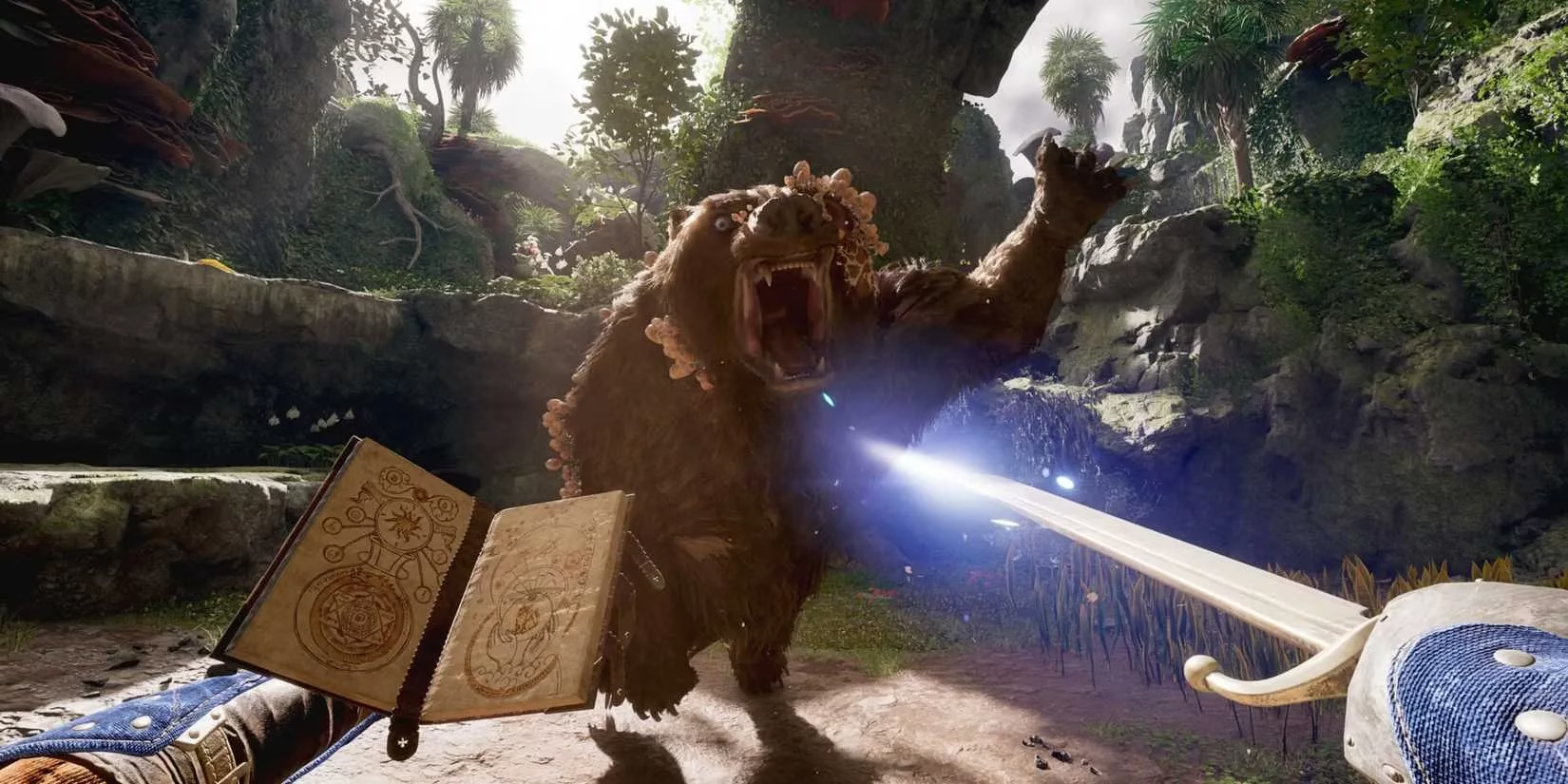 My first instinct was to rage-quit, but then I remembered something I'd read about the folks who made this game. Obsidian Entertainment doesn't really do rage. They do patience. They do pacing. They've got this quiet, almost stubborn confidence that feels so rare in the games industry right now. And honestly? It makes me root for them like no other studio.
I had this lightbulb moment while my character respawned. Back in 2024, at the DICE Summit, a couple of Obsidian’s top brass — VP of Operations Marcus Morgan and VP of Development Justin Britch — talked about something they call their “100-year plan.” I remember reading about it and thinking, Wait, a studio planning to exist for a century? In this economy? But here we are, mid-decade, and Obsidian is still humming along, releasing games that feel handcrafted rather than assembled on a factory line. That's not by accident.
The secret sauce, as Morgan and Britch outlined, isn't about chasing ten-million-unit launches or building a global empire of satellite offices. It's about staying lean, setting expectations that your game will be a “mild success” — not the next Call of Duty — and designing your whole budget around that realistic target. When I first heard that, I almost laughed. Then I thought about the graveyard of studios that bet everything on a single homerun and struck out. Obsidian quietly greenlights projects assuming they won't break sales records, and that frees them up to take creative risks without betting the farm. You can feel that creative breathing room in Pentiment, in Grounded, and yes, in Avowed. These games don't scream for attention; they just sit there, being brilliantly themselves.
What really gets me, though, isn't just the spreadsheet logic. It's the human piece. Obsidian's leadership openly said they aim for “the lowest turnover rate in the industry.” They don't want their people to feel like cogs in a big machine. That sentence hit me right in the chest. Having watched countless friends burn out at studios that treat developers like interchangeable parts, hearing that a Microsoft-owned company actively fights that culture is… well, refreshing doesn't quite cover it. It's almost radical.
I mean, think about it. Obsidian flirted with opening multiple international offices and then deliberately chose not to. They decided to stay tight-knit, “lean and invested,” as they put it. The result? More institutional knowledge stays in-house. Senior designers mentor juniors without the constant churn. When you play an Obsidian game, you can trace a lineage of ideas back to Star Wars: Knights of the Old Republic, Fallout: New Vegas, and the Pillars of Eternity days — not because they're recycling them, but because the people who had those ideas are often still in the room, still learning, still iterating.
By now you might be thinking, “Okay, but is this actually working in 2026, or is this just feel-good PR?” Well, let's look at the numbers without getting all corporate. After Microsoft acquired Obsidian in 2018, a lot of us held our breath. Big acquisitions can go sideways fast. But then Grounded dropped and 84% of critics gave it a thumbs-up. Pentiment — a game about illuminated manuscripts, for crying out loud — sat at 86% recommended. And Avowed, the action RPG that had been teased for what felt like forever, launched in early 2025 and currently holds a “Strong” rating with around 85% of critics recommending it. Those aren’t “billion-dollar franchise” numbers, but they’re consistent. They’re a pattern of delivering solid, memorable experiences without a single soul-crushing flop. In an era where we’ve seen massive layoffs and studio closures because of wildly unrealistic quarterly forecasts, Obsidian’s methodical stroll looks less like caution and more like wisdom.
I can't help but draw a contrast with the way I used to consume games. Like a lot of folks, I used to get hyped for those all-or-nothing blockbusters, the ones that spent half a billion on marketing and then vanished when they only sold six million copies instead of fifteen. It was exhausting. Playing an Obsidian game feels different. It’s like sitting down with a friend who isn’t trying to impress you every second, but who always has something interesting to say. You know that friend who remembers your favorite book and casually brings it up three years later? That’s Obsidian. There’s a quiet satisfaction in knowing that the save file I’m building in Avowed will probably still be accessible and meaningful ten years from now because the studio isn’t going to just implode chasing a trend.
Let's be real for a second: the games industry in 2026 is still healing. We’ve had waves of consolidation, projects cancelled mid-development, and a persistent sense that some publishers see players as wallets rather than people. In that landscape, Obsidian's “100-year plan” isn’t just a corporate strategy — it’s a beacon. I mean, who else talks about building institutional knowledge like it’s a sacred library? Who else sets budgets assuming their game will be a mild success and then actually sleeps well at night? Nobody. That’s who.
Just last week I was chatting with a fellow gamer at a coffee shop, and we got onto the topic of game preservation and studio longevity. I mentioned Obsidian’s approach, and she looked at me with this expression of disbelief and said, “Wait, a studio that actually plans to be here when my kid grows up?” Exactly. That’s the point. We spend so much time mourning the ones that disappear, we sometimes forget to celebrate the ones that plant trees whose shade they’ll never sit in. Obsidian is out here planting a whole forest.
So, as the rain lets up and I dive back into Eora, I feel a swell of gratitude. Gratitude that somewhere in the corporate maze of gaming, there’s a group of people who looked at the rat race and said, “No thanks, we’ll walk.” They’re not sprinting toward a cliff; they’re strolling toward a horizon that I, and maybe my children, will get to see. And you know what? I’ll be right there with a controller in hand, ready for every mild success they throw at me.
One last thought — because I can’t help myself when I’m this inspired — if you’re a developer reading this in 2026, maybe take a page from Obsidian's book. Don't let the pressure to go big blind you to the beauty of staying whole. Not every game needs to be a cultural earthquake. Sometimes a small, steady tremor is exactly what the world needs. And if you’re a gamer, next time you boot up an Obsidian title, take a moment to appreciate the quiet miracle behind the pixels. It’s not just a game. It’s a statement that slow and steady can actually win the race.
Now if you’ll excuse me, there’s a bear in the Living Lands that still owes me a rematch. And this time, I’m bringing patience — and a very large axe.
Comments