 AvowedRealm
For nearly three decades, Bethesda Game Studios has treated the start of every mainline Elder Scrolls adventure like an induction ceremony for the same strange club. The hero wakes up in chains, a guard makes a snide remark, and the player is told that they are a prisoner with no remarkable past. It happened in Oblivion, where the Hero of Kvatch was freed only because a secret Imperial escape route happened to pass through the cell. It happened again in Skyrim, where the Last Dragonborn was captured after wandering into the crossfire between Stormcloaks and Imperial soldiers near the border. This blank-slate tradition allows players to invent their own motivations, but in 2026, as role-playing games continue to evolve and The Elder Scrolls 6 remains one of the most anticipated titles in Tamriel, it is worth asking whether the next protagonist should arrive with a little more paperwork.
The Historical Prisoner Routine
The Elder Scrolls formula has rarely changed its opening note. In Oblivion, the protagonist begins in the Imperial City Prison, then gets swept into the Emperor's final escape attempt. In Skyrim, the player character is an unnamed prisoner on a cart, already bound for the block before a dragon attack conveniently postpones the execution. These introductions are effective because they create a level playing field: no local allegiances, no prior reputation, and no awkward questions about why a famed hero was stealing cheese wheels.
| Game | Starting Situation | Reputation at Start |
|---|---|---|
| Oblivion | Prisoner in the Imperial City | Unknown nobody |
| Skyrim | Captured near the border | Unnamed criminal |
| Morrowind | Pardoned by the Emperor | Recognized by a Blades agent |
| Avowed | Imperial envoy from Aedyr | Known official |
To be fair, The Elder Scrolls 3: Morrowind already bent the rule. Its protagonist was deliberately pardoned by the Emperor and sent to a Blades agent who already knew them, meaning the character arrived with a faint political mark before the main quest truly began. It is a small precedent that The Elder Scrolls 6 could update and expand.
Avowed Tried Something Different
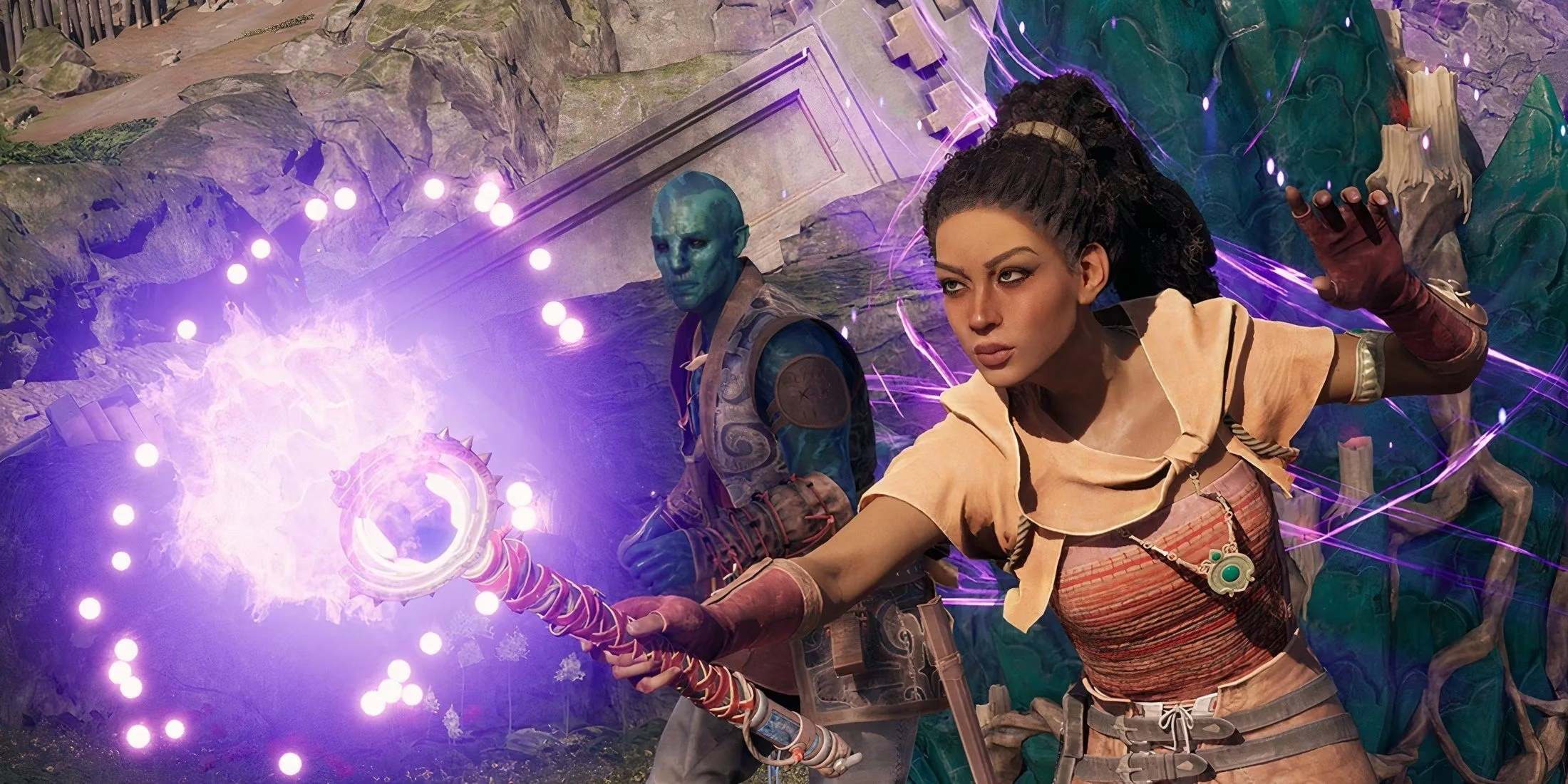
When Obsidian Entertainment launched Avowed in February 2025, it offered a playful alternative to the anonymous prisoner. The protagonist is not a random captive; they are an envoy chosen by the emperor of the Aedyr Empire and sent to the Living Lands to investigate the Dream Scourge, a soul-plaguing blight that has been devastating the region. This is a set background, but it remains vague enough to avoid straitjacketing the player. Different factions disagree about how the envoy should handle the crisis, and the player can lean into diplomacy, violence, curiosity, or empire loyalty.
That small shift makes a large difference. Instead of beginning as a mute nobody who must ask every bartender for basic directions, the player has a role, a mission, and a reason for strangers to open their doors. It does not remove role-playing; it gives the performance a frame.
Why A Little Backstory Can Be Liberating
A completely empty character sheet sounds like freedom, but in practice it can feel like being handed a blank notebook and told to write a masterpiece before breakfast. Many players freeze during character creation or fall back on the same jokes. A gentle backstory acts as a creative prompt. It says: you are an envoy, a prisoner of war, a disgraced scholar, or a minor noble, now decide what that means.
This approach also helps the game teach its own lore. If The Elder Scrolls 6 gives the protagonist a recognized position, NPCs can naturally explain the current state of Tamriel, the role of the Emperor, provincial conflicts, and why everyone is so tense about towers, scrolls, or sea elves. Instead of pausing the adventure for a history lecture, the background can put the player inside the world's politics from the first conversation.
Could The Elder Scrolls 6 Upgrade Its Prisoner?
Bethesda could keep the iconic prisoner opening while adding a new layer. Imagine a character who is still in chains, but who was somebody before the arrest: a disgraced battlemage, a former Blades agent, a diplomat from Hammerfell, or a minor noble accused of conspiracy. The guards would treat them differently. Rivals would recognize them. Dialogue options could let players embrace, reject, or lie about that past, which is far more interesting than starting as a blank slate.
This would be a departure for Bethesda, bringing the series closer to games like Mass Effect, where the hero has an established history that players interpret through choices. But it would not have to be rigid. The background could remain just loose enough to support many builds, alignments, and personal stories. Morrowind's pardoned prisoner proves the series has toyed with this idea before.
The Verdict 🛡️
The Elder Scrolls 6 still has time to decide, perhaps too much time, and the world has changed since Skyrim's 2011 launch. Avowed demonstrates that giving a character a title like envoy does not destroy player freedom; it sharpens it. A hero who starts as someone rather than no one can still become anyone. If the next Elder Scrolls opens with a prisoner, and it probably will, the developers might consider letting that prisoner arrive with a reputation, a few enemies, and maybe a slightly better pair of boots.
Comments