 AvowedRealm
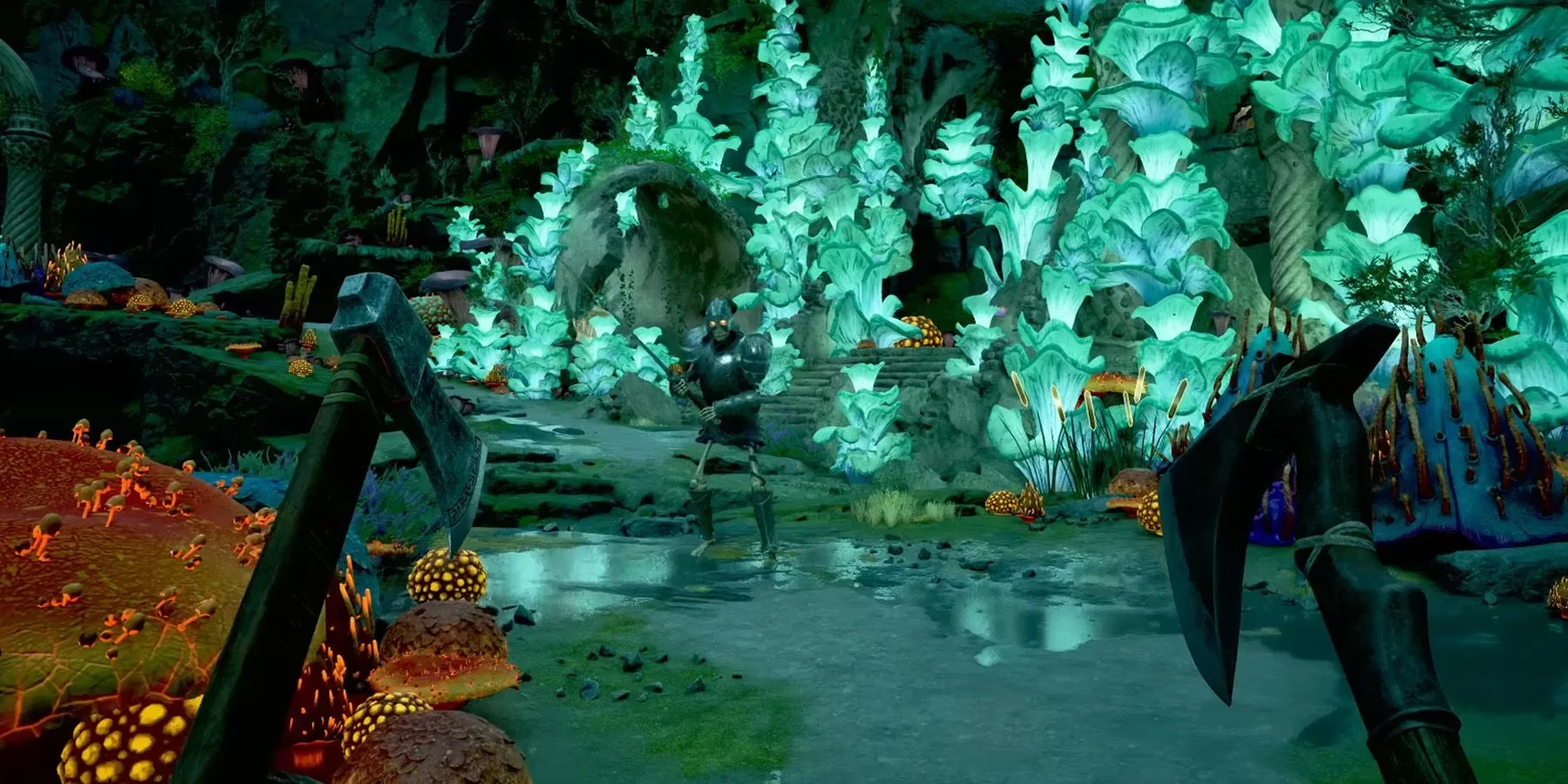
Stepping into the Living Lands for the first time was like walking into a fever dream painted by a mad botanist. Giant, bioluminescent fungi pulsed with an eerie purple light, their tendrils twitching in the air as if tasting my character’s soul. I’d heard the developers at Obsidian talk about how Avowed builds on the legacy of Pillars of Eternity, but nothing quite prepared me for the sheer density of storytelling woven into every rock, every shack, and every whispered conversation. How does a studio known for complex RPGs take a place that was once just a line of flavor text—"a wild, eccentric frontier"—and turn it into a living, breathing world? The answer, as I learned from Game Director Carrie Patel and Region Director Berto Ritger, lies in a meticulous layering of information, a respect for player curiosity, and a willingness to let the environment do the talking.
Carrie Patel once described what she calls the "gold-tier" information: the absolute essentials a player must know to navigate the story. This is the skeleton of the plot, delivered through core quests and key dialogues. Then there’s the "silver-tier"—useful background that enriches but isn’t mandatory—and finally the "bronze-tier," the delicious fluff for lore-hungry souls like me. When I stumbled upon a crumbling shrine to a forgotten animancer, the game didn’t force a lore dump on me. Instead, a single scrawled note hinted at a failed experiment, and a nearby villager muttered something dark about the consequences of playing with souls. I could dig deeper, or just walk away. That’s the philosophy at work: golden threads guide you, but the tapestry is yours to explore—or not. Isn’t that exactly what makes an RPG feel personal?
But words are only half the story. As Berto Ritger pointed out, in a 3D medium you don’t need paragraphs of description; the visuals can carry the weight. I remember standing on a ridge overlooking Paradis, the game’s bustling hub city. Right beneath the gleaming Aedyran spires, a sprawling shantytown clung to the rocks, its ramshackle wooden structures a silent testament to displacement. No NPC had to explain that the empire’s arrival had uprooted communities—the juxtaposition screamed it. That’s visual storytelling at its finest, and it transformed my walk through the city into a political education. And with ray tracing making the river shimmer realistically, the majesty and the misery were equally tangible.
Fleshing out the Living Lands from mere "bronze-tier" concept to a map full of distinct regions was, as Patel told me, a journey from guiding star to intricate cartography. The Pillars of Eternity background mentioned it as a distant, strange land, but nobody had drawn its borders or delved into its soul. What made it special? Why were its creatures bigger, bolder, and more colorful? Over time, the team built a unifying theme: the land itself is hostile, and the people who brave it are eccentric extremists. Yet within that umbrella, each region shouts its own identity. In Emerald Stair, I saw how Animancy—the fictional science of soul magic—had been repurposed for agriculture, with glowing purple contraptions crackling with soul-energy, wires arcing like angry veins across the fields. The land didn’t appreciate the meddling, and the result was a landscape that felt scientifically plausible yet deeply fantastical.
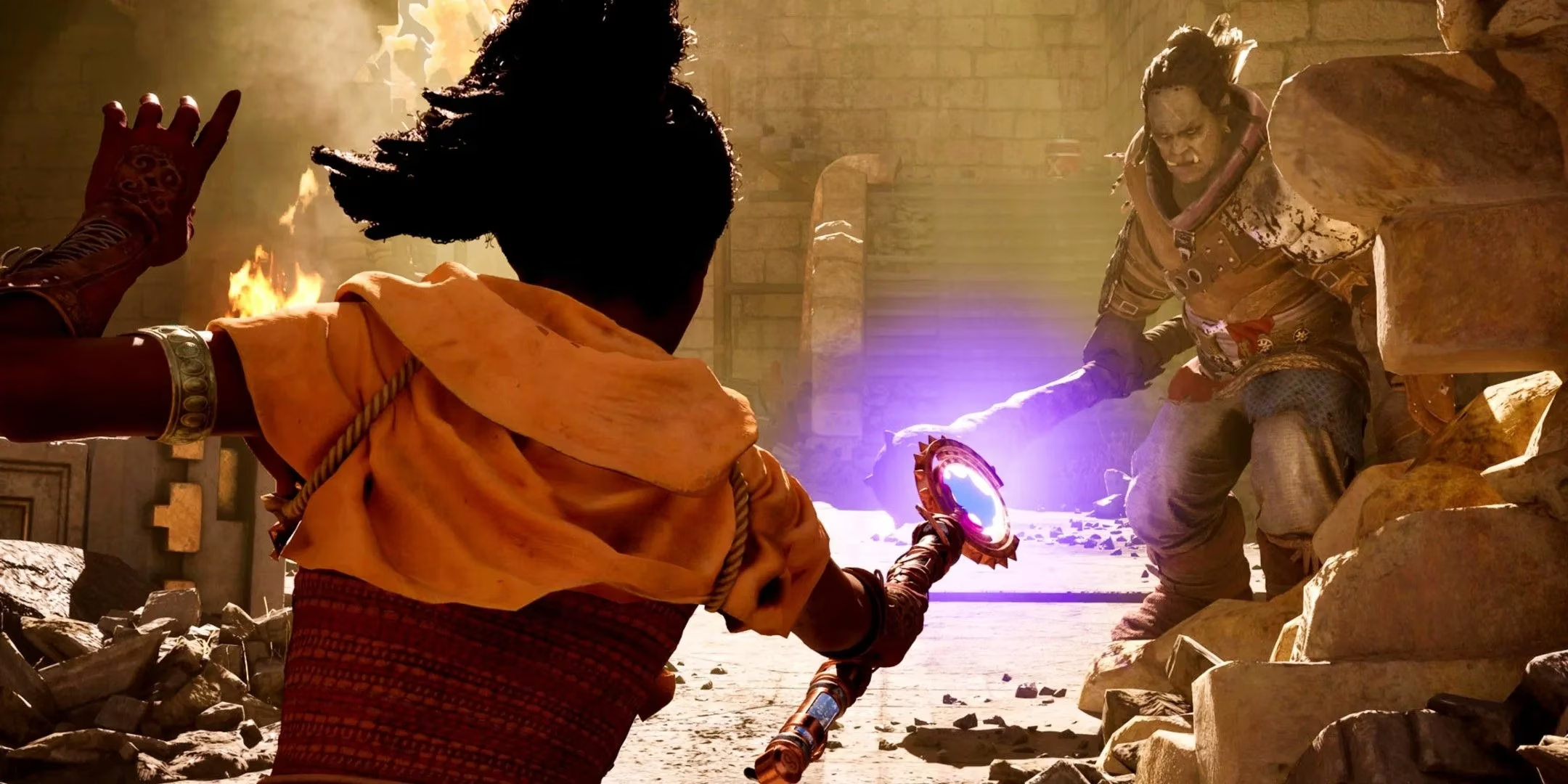
This brings me to the moral fabric of Avowed, which refuses to wrap things in simple good vs. evil. The Aedyrans are an imperial power, yes, but they’re not monolithic villains. Some are genuinely awful; others are just clerks trying to feed their families. How do you craft a narrative that touches on real-world colonialism without becoming a clumsy allegory? Obsidian’s approach, as Patel explained, is to root everything in the messy, self-interested histories of Eora. You meet characters who act out of greed, fear, or misguided idealism, and the game doesn’t tell you what to think—it just presents the complexity and trusts you to wrestle with it. I remember a side quest where I had to choose between helping a displaced native reclaim his home or supporting an Aedyran official who promised stability. Neither option felt purely right, and that discomfort lingered long after I put down the controller. Can a game truly respect its players if it doesn’t ask hard questions?
Player agency is the heartbeat of all this. Patel noted that Obsidian designs for many different types of role-players: the power fantasy hero, the arcane scholar, the chaotic button-pusher. I’ve always leaned toward the idealistic diplomat, but I tried a more taciturn, "just point me at the problem" run and was amazed how the dialogue trees accommodated my curtness. The game constantly offered small moments that defined my envoy’s personality—little interactions where I could be kind, cruel, or simply indifferent. These micro-choices added up, and by the end, I felt like I had truly authored my version of the story. Even the environment supported that illusion; a desolate battlefield I stumbled upon reinforced my decision to escalate a conflict, while a hidden garden rewarded my pacifist curiosity.
Of course, not everyone wants to chew on dialogue for hours. Berto Ritger emphasized that side quests tend to be narrative-heavy, while bounties offer combat-centric, loot-driven opt-in content. I found this balance refreshing. When my brain grew tired of political intrigue, I hunted down a monstrous troll in a sunken ruin, and the rhythmic combat loop—arcane spells, charged melee, desperate dodging—felt like a palate cleanser. Then, refreshed, I’d return to the tangled web of faction politics, noticing how the combat encounter had subtly changed the way NPCs reacted to me. The world pulsed with consequence, always.
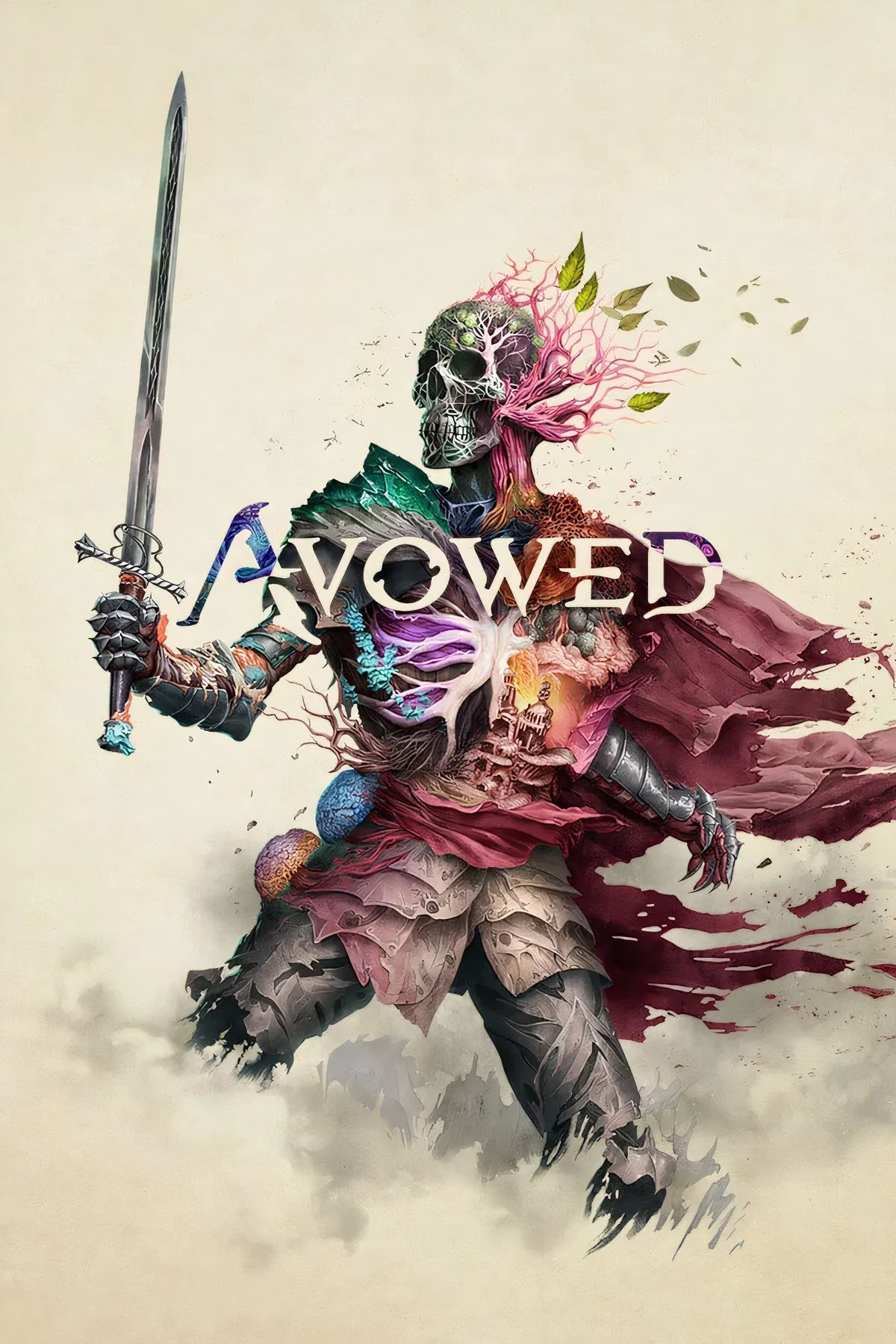
Inspirations for this grotesque beauty came from unexpected places. Patel mentioned the movie Annihilation, with its eerie, transformative shimmer, as a reference for the Dream Scourge—the mysterious force corrupting the land. I saw that influence in the way colorful fungus warped a once-peaceful grove into a psychedelic nightmare. And personally, she adores Morrowind for its weird, vibrant alienness, which echoes through the Living Lands’ bizarre flora and fauna. Meanwhile, Ritger’s love for sci-fi seeped into the Animancy technology, creating a world where "mechanical stuff in fantasy" feels entirely organic to Eora’s metaphysical rules.
As I wander through the final zone, still discovering hidden caves and poignant environmental stories I missed on previous playthroughs, I can’t help but smile. Patel mentioned her excitement about players finding things her own developers didn’t know were there, and I am living proof. The game is dense in the best way—handcrafted, varied, and full of secrets that reward curiosity without punishing those who stick to the main path. Avowed doesn’t just build a world; it builds a relationship between that world and the person exploring it. And that, I think, is the real magic of an Obsidian RPG.
Comments