 AvowedRealm
The fantasy RPG genre predates video games by decades, with commercial tabletop systems reaching players as far back as the 1970s. Over more than fifty years, the genre has evolved dramatically, especially in the video game landscape, where rapidly advancing technology creates growing expectations for scale, visual fidelity, and player freedom. Despite those changes, The Elder Scrolls series has managed to retain its core identity for roughly three decades. In 2026, as major studios continue to push dark satire, classless progression, and culturally specific reinventions, The Elder Scrolls 6 may stand out by returning to something simpler: classic fantasy.
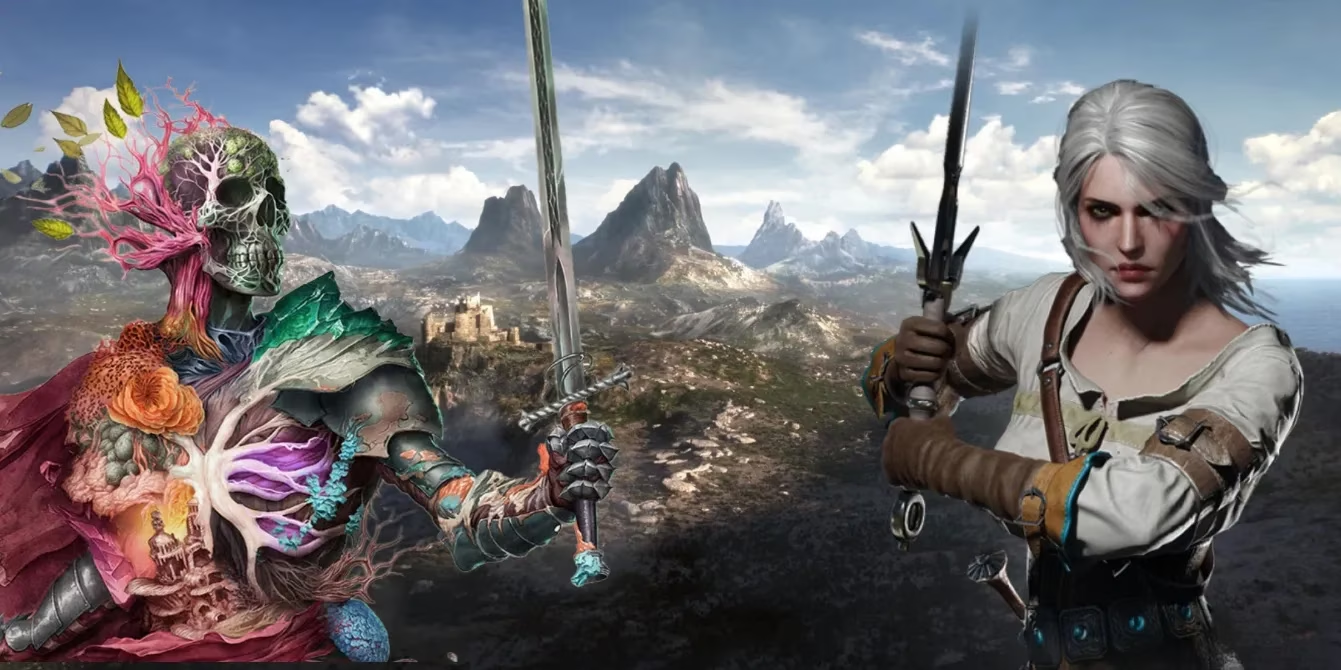
The series has undergone major transformations over the years. It moved into a 3D open-world structure, received multiple graphical overhauls, and even became an MMO through The Elder Scrolls Online. Yet the franchise has always remained a fantasy RPG in the most traditional sense of the phrase. Players choose a character, explore a sprawling world, complete quests, and battle magical threats. That simple loop has never disappeared, and it could become a major advantage when the next mainline entry finally arrives.
Modern fantasy RPGs have increasingly tried to carve out niches by subverting convention. Many traditional stories cast the player as an infallible hero with a unique power, destined to save the world from forces of evil. To avoid feeling repetitive, developers experiment with tone, structure, and player expression. Obsidian Entertainment's Avowed is a clear example.
Avowed, released on February 18, 2025, is a spinoff of the Pillars of Eternity series. It intentionally breaks from classic fantasy molds. Its fantasy races do not conform to usual stereotypes, its locations are not built around the Gothic settings often associated with the genre, and its combat takes a more action-heavy approach. Avowed also does away with traditional fantasy RPG classes. Instead of selecting a rigid role at the start, players craft their own class through the skills and abilities they choose to invest in over time. That freedom is appealing, but it moves the experience away from the familiar class fantasy many players still enjoy.
Fable represents another twist. The long-awaited revival has carried forward the dark humor and satire of its predecessors, using comedy and social commentary to flip fantasy staples in unexpected directions. Rather than treating the hero's journey with complete seriousness, Fable often mocks it, turning fantasy conventions into material for parody.
CD Projekt Red's The Witcher 4, revealed at The Game Awards, is expected to continue the series' tradition of mature storytelling and Slavic folklore influences. While The Witcher games can feel like conventional fantasy RPGs in many respects, their morally ambiguous choices, grim tone, and cultural grounding give them a distinct identity. They are not simple tales of a chosen hero saving the realm.
Against this lineup, The Elder Scrolls 6 might gain an unusual advantage by refusing to chase the same trend. Instead of reinventing the wheel, the game could embrace the fantasy RPG genre in its most traditional sense. Players could choose from familiar staple races, select a classic class or build, fight iconic fantasy monsters, and confront a recognizable magical evil. That straightforward promise may feel refreshing after a wave of subversive and mechanically complex releases.
| Fantasy RPG | Core Approach | Status in 2026 |
|---|---|---|
| Avowed | Classless progression, action-heavy combat, non-Gothic locations | Released February 18, 2025 |
| Fable | Satirical tone and dark humor | Highly anticipated |
| The Witcher 4 | Traditional fantasy with Slavic folklore and mature themes | In development |
| The Elder Scrolls 6 | Classic races, classes, monsters, and magical threats | No release window confirmed |
The timing could work in Bethesda's favor. By the time The Elder Scrolls 6 finally arrives, some players may be exhausted by ironic fantasy, ambiguous systems, and genre deconstruction. A conventional adventure with clear stakes, familiar archetypes, and a grand world to explore could feel both nostalgic and bold. The series has spent decades proving that traditional fantasy does not have to feel outdated.
At the same time, tradition does not mean refusing modern quality. The Elder Scrolls 6 can still use modern rendering, improved animation, deeper simulation, and better combat while preserving the classic structure. The key difference is tone and clarity. In an era where many role-playing games question the hero archetype or blur class boundaries, a game that simply lets players become a hero in a world of dwarves, elves, dragons, and ancient magic may be exactly what fans want.
The Elder Scrolls 6 has not received an official release window, but anticipation remains high. When it does launch, it may not need to reinvent the genre. By doing what The Elder Scrolls has always done, it can offer something that many current fantasy RPGs no longer prioritize: a straightforward, grand, and deeply familiar adventure.
Comments