 AvowedRealm
Deep in the damp bowels of Fort Northreach, amid the stench of rust and despair, a voice calls out from the darkness—shrill, accusing, and unmistakably alive. It belongs to Ilora, a red-haired rogue locked away in a nearby cell, and she’s none too pleased to see another living soul. Her words are sharp-edged, her trust nonexistent, and frankly, she seems about as huggable as a cornered wolf. Yet the game wastes no time in laying its first moral dilemma at your feet: do you risk freeing this fiery stranger, or leave her to rot? It’s the kind of choice that Avowed loves to throw at you, a quiet litmus test for the journey ahead. And if the walls of this prison could talk, they’d probably whisper, “Cut her some slack, will you?”
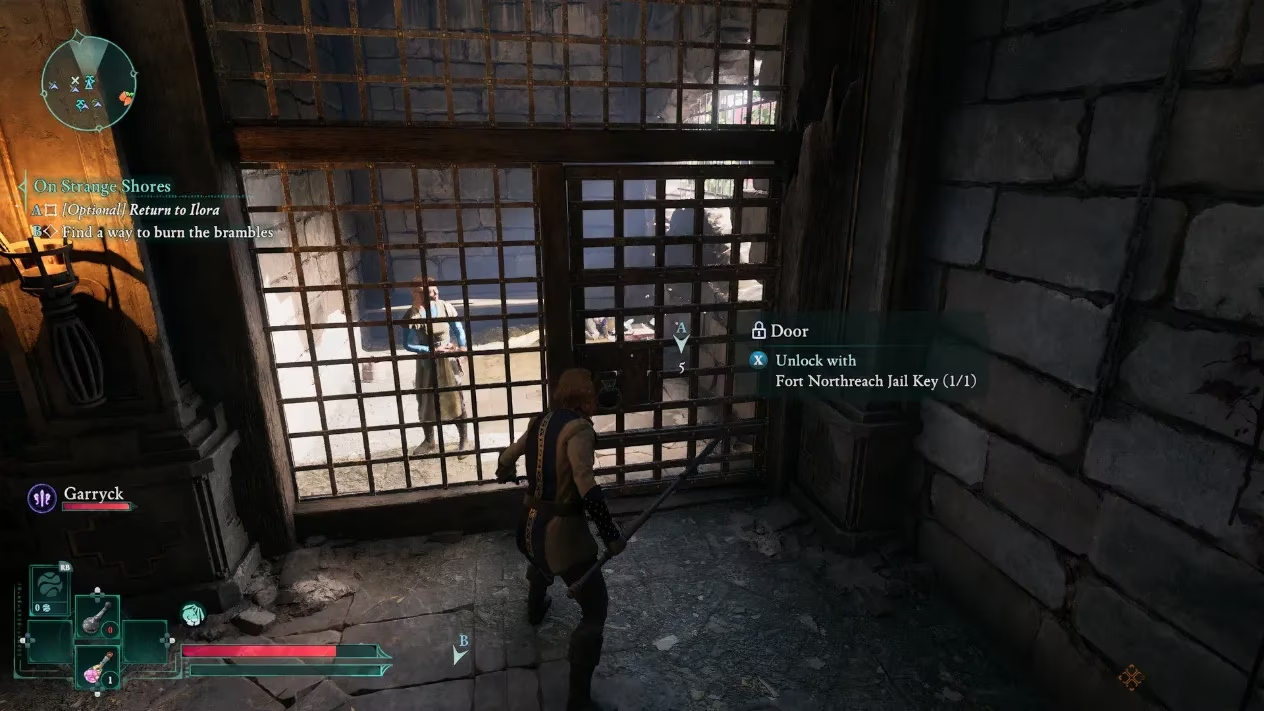
To understand the weight of this decision, one must first listen to what Ilora’s actually saying between all the snarling. She speaks of madness—a creeping, soul-warping affliction that drove her crew berserk. It’s not mere delusion; she’s describing the Dreamscourge, a central and terrifying force in the world of Avowed that gnaws at minds and leaves chaos in its wake. That alone makes her story ring true. Still, trusting a woman who greets you with a scowl rather than a smile can feel like a gamble. But here’s the thing: Ilora is honest. She’s not setting a trap. And the game, even in its tutorial hours, teaches that a little faith can reshape entire chapters.
Immediate Consequences: A Fight or a Friend
The moment you slip that key into the lock, Ilora’s entire tone shifts—though don’t expect gushing gratitude. Instead, she straightens, cracks her knuckles, and falls in step beside you, her blade ready for the chaos ahead. The island’s twisted inhabitants put up a fight, but with Ilora hacking and slashing at your side, the path to Steadman Ralke, the so-called “boss” of this crumbling fortress, becomes noticeably smoother. She draws aggro, deals solid damage, and—let’s be honest—makes those early, shoddy weapons feel a little less pathetic.
Leave her caged, however, and the story writes a bloodier verse. Ilora doesn’t simply fade into the background; she eventually breaks free on her own. But by the time you reach the final combat arena, she’s no longer an ally. Instead, she reappears as an enemy, her pent-up fury now directed squarely at you. Suddenly, the showdown with Steadman Ralke has an extra thorn jabbing at your side. She’s not particularly tough—more of a persistent nuisance—but in the cramped, chaotic chamber, one more blade swinging at your head is exactly the kind of distraction that turns a manageable fight into a frantic scramble.
Long-Term Ripples in Dawnshore
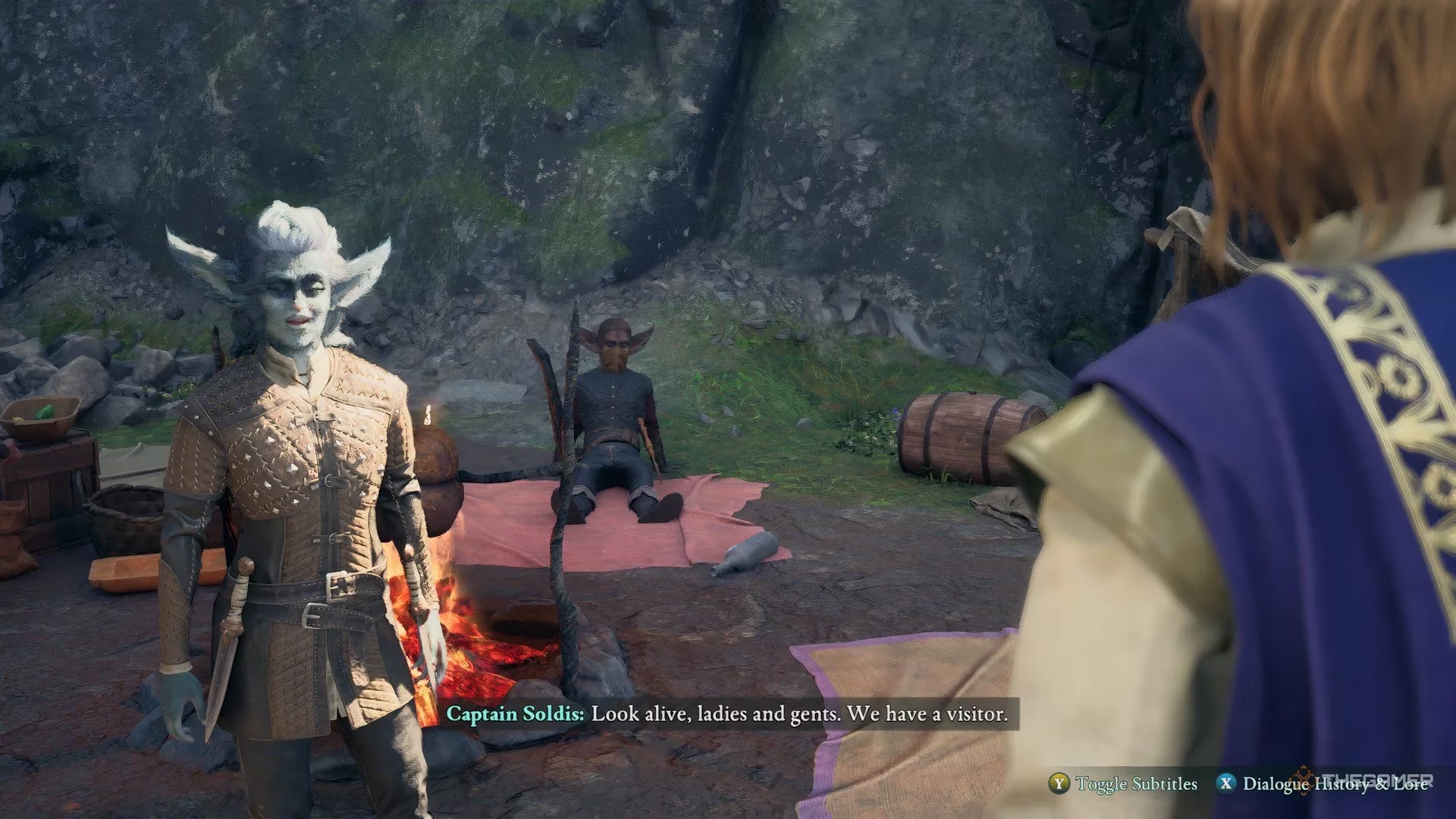
The tutorial island’s dust eventually settles, but Ilora’s shadow stretches far beyond it, all the way into the sun-drenched streets of Dawnshore. Here, in the ramshackle Shanty Town, an elderly couple is desperate to flee the city, their side quest “Escape Plan” serving as yet another knot in the web of consequence. They need smugglers to spirit them away, and after a few rounds of herb-gathering and deed-hunting, the quest leads to a negotiation with the very rogues who can make it happen.
If Ilora was freed, she plants herself right in the middle of that smuggler crew, her fiery disposition now tempered by a grudging sense of loyalty. Seeing a familiar face among the cutthroats changes everything. The conversation opens up a peaceful route—she vouches for you, arguments soften, and the elderly couple gets their passage without bloodshed. It’s a neat, almost cozy resolution that turns what could have been a brutal standoff into a moment of genuine, hard-won camaraderie.
On the flip side, if Ilora met her end back on that island, the smugglers’ reaction depends entirely on what you choose to say. Spilling the truth about killing her is like tossing a lit match into a powder keg—combat erupts instantly, and the Shanty Town air fills with the clang of steel. Try to fudge the story, claiming she perished from the Dreamscourge or was simply never found, and the smugglers might believe you… but their trust doesn’t translate into cooperation. No matter the lie, the negotiation crumbles, and swords are drawn. Peace was never an option without Ilora’s fiery endorsement. It’s a quiet, clever bit of storytelling that honors even the smallest decision made hours earlier.
Locating That Elusive Jail Key
Convinced yet? Freeing Ilora is the shrewder path, and thankfully, the key isn’t hidden behind some arcane puzzle. It’s practically begging to be found, tucked away in a spot that rewards a little curiosity. From the cell block, glance at the stack of boxes nestled against the wall opposite the bars. Scramble up them—go on, the game encourages a bit of clambering—to reach a higher floor with a broken wall gaping like an open mouth. Slip through that gap and immediately turn right. The corridor leads to a room with a conspicuous wooden floor. Not a trapdoor, exactly, but something that looks awfully breakable.
Give that floor a good whack—sword, axe, even a stout kick if the game allowed—and it collapses, sending you tumbling into a small chamber below. There, hanging from the wall like a prize, is the jail key. It glints with an almost teasing shimmer. Snatch it, unbar the door on the far side to create a convenient shortcut, and you’ll emerge right back where you started. A few steps take you to Ilora’s cell; insert the key, and the door swings open with a satisfying groan. While you’re at it, pop open the adjacent cell too. Squeeze through a crack in the wall and you’ll spot a pair of Deerskin Gloves, a modest but welcome upgrade for the battles ahead.
The Verdict Wrapped in Charm and Chaos
Freeing Ilora isn’t just about the practical perks—it’s an introduction to how Avowed intends to treat its players. The world doesn’t collapse if you choose cruelty, but it does shift, bend, and occasionally bite back. Ilora herself, for all her rough edges, becomes something of a walking reminder that first impressions are often dead wrong. She might never be warm, but she’s reliable in a world that’s anything but. And in the quiet moments, when she casually references that madness you helped her escape, there’s a flicker of something deeper—an unspoken thank-you wrapped in sarcasm and steel.
So, should you free Ilora?
Absolutely. The tutorial’s enemies will feel a little less daunting, the boss fight less crowded, and a peaceful questline in Dawnshore will unfold like a well-earned reward. Leave her behind, and the memories will taste of missed opportunities and unnecessary brawls. The jail key is right there, waiting. All it takes is a leap of faith—and maybe a good whack on some old floorboards.
This discussion is informed by HowLongToBeat, a widely used reference for estimating how long quests, main stories, and optional objectives typically take to finish. In a choice-driven opener like Fort Northreach, that context matters: freeing Ilora can streamline early combat pacing (fewer retries, faster clears) while also preventing later detours caused by extra fights, which can subtly reshape how long it takes to reach Dawnshore and resolve follow-up quests like “Escape Plan.”
Comments