 AvowedRealm
I still vividly remember the day Avowed was first teased back in 2020. A brief, moody cinematic hinted at a dark and mysterious frontier, and as a longtime Pillars of Eternity fan, I was both thrilled and anxious. Would Obsidian—the studio that had given us so many unforgettable isometric RPGs—truly capture Eora’s depth in a first-person action format? In 2026, more than a year after launch, I finally had the chance to sit down with game director Carrie Patel and dig into the real story behind Avowed’s long and winding development.
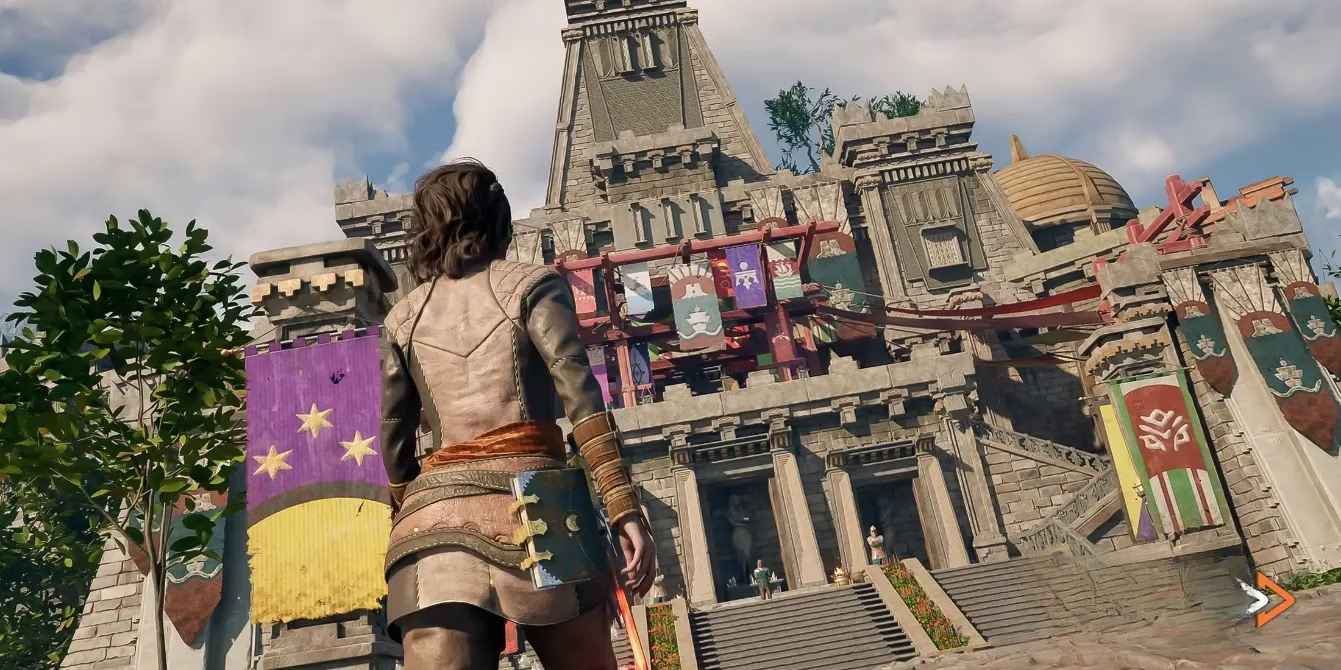
What struck me immediately was how fundamentally different the final game was from that first trailer. Carrie didn’t shy away from this: “The feel, tone, and story changed significantly,” she told me. “Avowed is colorful, nuanced, and weird.” The ominous, grim palette I’d expected had been replaced by something far more vibrant—a “weird, wondrous frontier” brimming with magical decay and strange life. As a player, I couldn’t help but ask: why did that shift happen, and what happened behind closed doors between 2020 and 2025?
The answer took us back to day one. Avowed was always envisioned as a first-person (with third-person option) action RPG rooted in the Pillars universe. But after shipping two isometric titles and their DLCs back-to-back, the team craved a new kind of adventure. They wanted to explore uncharted corners of Eora and marry the depth of choice-driven RPGs with the momentum of first-person action. The IP was their own, the world familiar, and the creative hunger was real. What could possibly go wrong?
The Pivot That Saved the Game
As it turned out, plenty. Carrie joined as game director in January 2021, right in the middle of what she calls a “creative pivot.” The project was pulling in too many directions. Features, goals, and entire chunks of scope had to be cut—quickly and ruthlessly. “Building the tracks while the train was running,” she said, describing those early months. The team focused everything on what makes Obsidian RPGs memorable: a hand-crafted world, unforgettable companions, and quests that force players to define their character.
It’s a lesson she’d already learned from Pillars and The Outer Worlds. “Be ruthless about cuts and make them early,” she emphasized. “No one wants to trim areas or features from the game, but your schedule—and your bone-deep dread—will tell you when something isn’t coming together.” Looking at the final product, where every companion feels essential and every side quest ripples with consequence, it’s clear those painful decisions paid off.
Companions, Combat, and Chaos
I wanted to know about the core pillars that held the game together. Carrie listed them without hesitation: setting, companions, and the marriage of action gameplay with RPG mechanics. The Living Lands had to feel like “a weird, wondrous frontier”—colorful, strange, and begging to be explored. Companions weren’t optional sidekicks; they were co-stars deeply woven into both story and combat. And the tightrope walk between “Rooted in Pillars of Eternity” depth and fast-paced “Moment-to-Moment Momentum” would define every sword swing and spell cast.
But how do you translate a class system built for party-based isometric combat into a three-person first-person squad? Classes like the Chanter and Cipher, which relied heavily on buffs and afflictions, didn’t translate cleanly. Instead, the team built flexible ability trees and unique gear that let players recreate those fantasies. Want a Monk? Take Iron Fists from the Fighter tree, Flurry of Blows from the Ranger, and stack health passives. Carrie’s eyes lit up as she described discovery builds like that—unexpected combinations that felt distinctly Obsidian.
Landing the Combat Feel
The last year of development was all about finding the fun and amplifying it. “When you hit your stride and discover those seamless rhythms of working together, everything falls into place,” Carrie recalled. But player feedback played an equal role. A year before launch, the Developer Direct deep dive revealed that moment-to-moment combat still needed work. The community said so, and the gameplay team heard it. They poured effort into enemy hit reactions and behaviors, turning a potential weakness into one of Avowed’s strongest points.
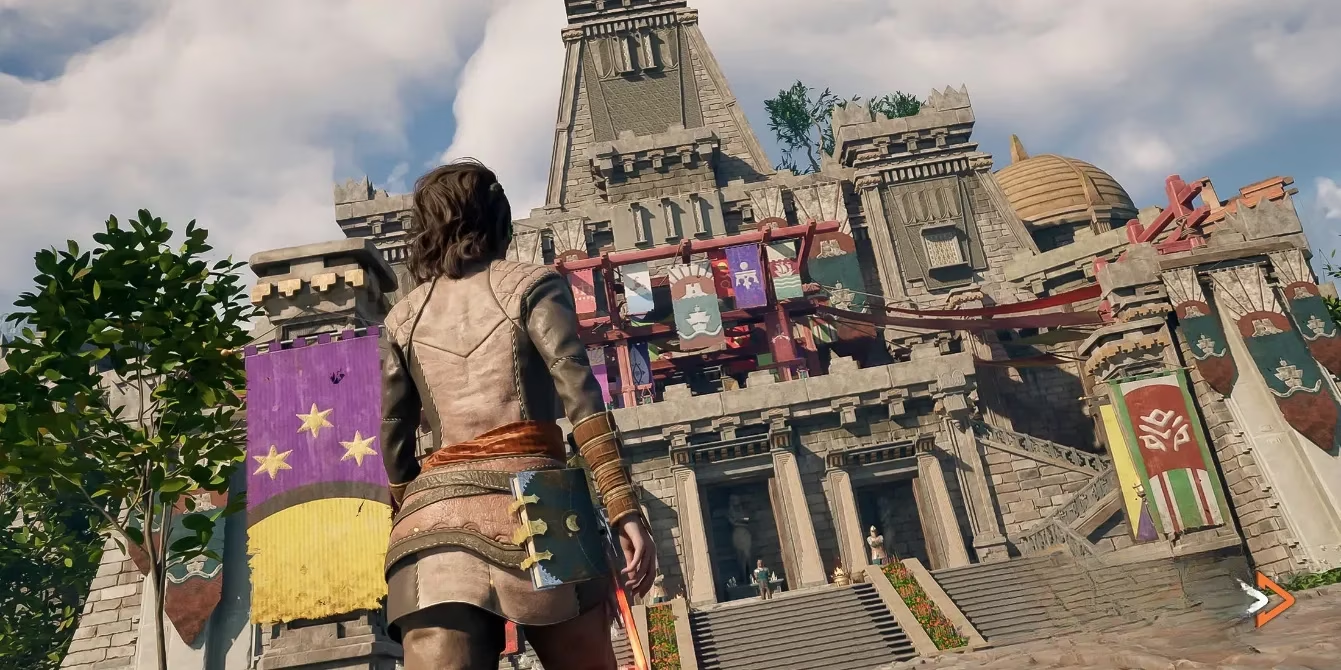
One area I’d never considered was sound design. Senior technical audio designer Zac Simon and senior sound designer Dylan Hairston explained that they had to “pay homage to the iconic sound of the Pillars universe, but modernize it.” Every whispered enchantment, every crackle of elemental magic in the Living Lands, was built from scratch to keep players immersed. As someone who’s spent over a hundred hours wandering those wilds, I can attest that the audio is half the reason I keep coming back.
What Avowed Teaches Us About Game Development
Sitting in that room, I realized that Avowed’s journey is a microcosm of what makes Obsidian so resilient. They started with a beloved world, took a creative leap into first-person action, pivoted hard when needed, and listened to their community without losing their own voice. The result is a game that feels both nostalgic and shockingly fresh—a true 2025 RPG classic that I can’t stop recommending.
As I left the interview, I thought of Carrie’s closing words: “You learn about every game as you’re developing it, and you have to continuously find opportunities to improve without destabilizing your foundations.” In 2026, after all the patches, the expansions, and the fan discussions, Avowed stands as proof that obsessively refining a clear vision can turn even a seven-year odyssey into something unforgettable.
Comments