 AvowedRealm
In the years since Obsidian Entertainment first revealed Avowed, the action RPG has moved from a heavily anticipated 2024 title to a released game in 2025 and, by 2026, a established part of the studio’s catalog. Set in the Living Lands of Eora, the same fantasy universe as Pillars of Eternity, Avowed was positioned as a choice-driven first-person RPG carrying some of The Outer Worlds’ DNA. For role-playing fans, one of the most scrutinized subjects has been dialogue: how many options exist, how meaningful they are, and whether they reflect a character’s identity. A pre-launch clarification from game director Carrie Patel helped answer part of that question, revealing that at least one special dialogue icon shown in the Xbox Developer Direct demo was not a skill check but a background-locked choice.
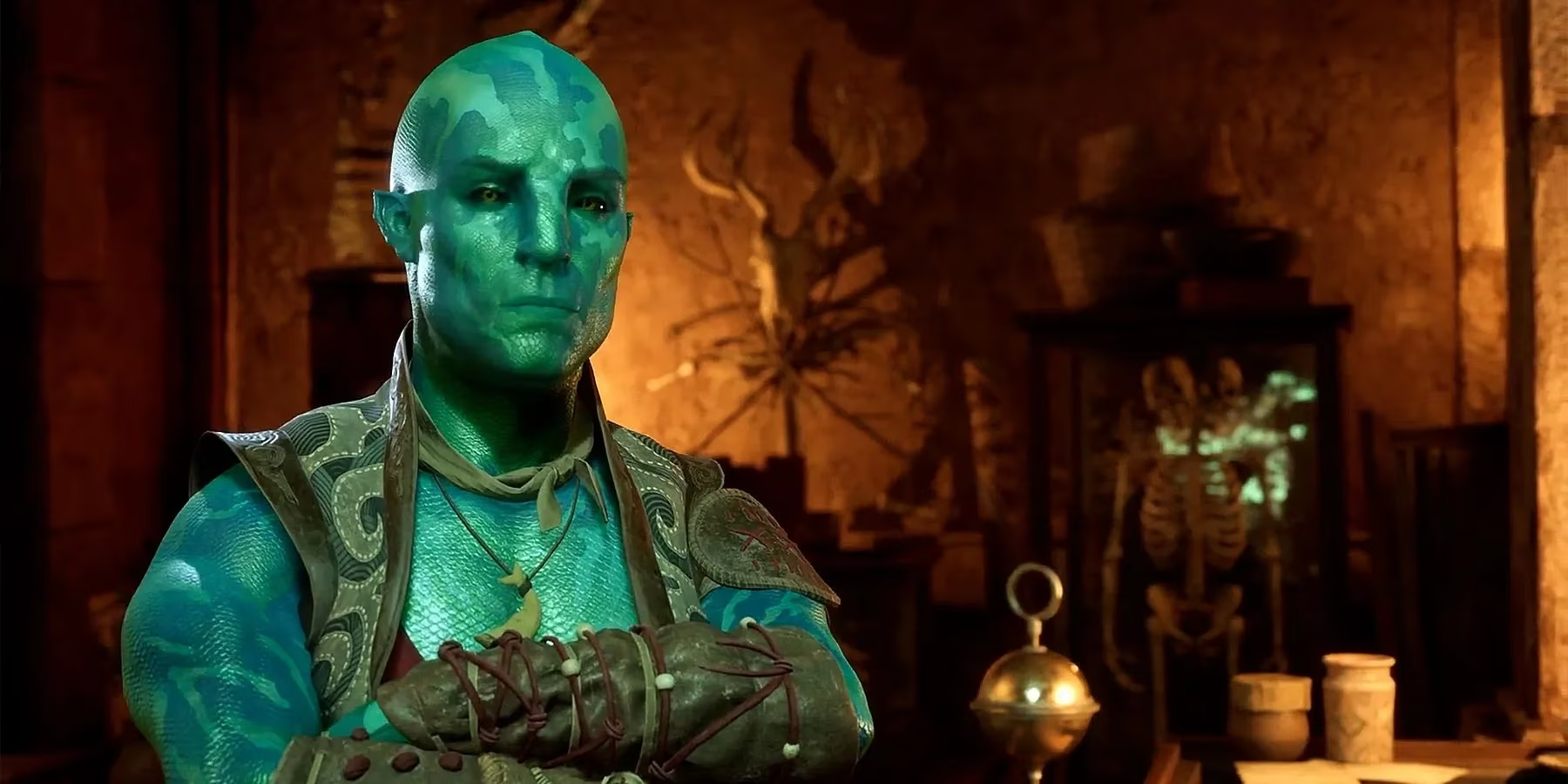
The concern around Avowed’s dialogue choices was understandable. During the 2024 Xbox Developer Direct game overview, a conversation with Private Nauki presented three dialogue options. The first option appeared more empathetic than the others and carried an arrow-like symbol beside the text. At the time, some observers assumed the icon indicated a skill the player had unlocked, similar to how skills can unlock dialogue lines in Starfield. That interpretation fit the broader role-playing game trend of tying conversation options to character builds, but it was not the full story. Speaking on Episode 377 of the Dropped Frames podcast, Patel clarified that the option with the particular icon was background-locked. For role-playing enthusiasts, the detail was significant: it confirmed that an Avowed character’s background would influence how conversations could unfold.
That clarification matters because dialogue systems in RPGs are notoriously difficult to get right. Some games offer the illusion of choice, where several lines produce nearly identical outcomes. Others, such as Baldur’s Gate 3, set a high standard by offering numerous options with lasting narrative consequences. Avowed does not need to match every RPG in raw dialogue volume, but it does need to make choices feel grounded in the character. Background-locked options are one way to do that. They allow the game to acknowledge who the player character was before the events of the story, rather than treating every conversation as a blank slate.
Obsidian’s challenge is partly structural. The player character in Avowed comes from the Aedyr Empire, which limits race selection to human or elf. That restriction reduces the possibility of race-specific dialogue on the scale some RPGs enjoy. Still, Obsidian’s history suggests that factions can fill part of the gap. If Avowed includes various factions for players to join or support, those affiliations could provide additional dialogue choices and reactions from non-player characters. Race and faction can work alongside background as identity markers, giving players more ways to express their character beyond a default set of lines.
The Pillars of Eternity connection also raises expectations. In Pillars of Eternity, ten backgrounds were available for characters from the Aedyr Empire, which suggests that Avowed could support a similarly broad set of personal histories. The hope is not simply that many options exist, but that they are distributed meaningfully across conversations. A healthy list of dialogue choices can make interactions with Avowed’s NPCs feel more responsive, while a thin list can make the world feel less reactive than the premise promises.
| Dialogue element | What was shown or clarified | Why it matters |
|---|---|---|
| Background-locked option | Carrie Patel confirmed that a special icon in the Private Nauki conversation marked a background-locked choice | Character history can shape conversations, not just combat or exploration |
| Skill-linked assumption | The icon was initially mistaken for a skill-based dialogue option | It showed how closely fans were watching for RPG systems |
| Race restriction | The Aedyr origin limits player races to human and elf | Race-specific dialogue may be narrower than in some RPGs |
| Faction potential | Obsidian’s RPG history suggests factions could influence dialogue | Affiliations may add another layer of identity and response |
| Pillars precedent | Pillars of Eternity offered ten Aedyr backgrounds | Avowed has a model for varied personal histories |
By 2026, the conversation has shifted from speculation to assessment. Avowed’s dialogue system is no longer a promise in a trailer; it is part of a released RPG that players can compare with Obsidian’s past work and with modern genre standards. The background-locked option revealed before launch remains a useful example of the game’s approach. It shows that Avowed is interested in connecting conversation to character identity, even if the full depth of that connection depends on how often backgrounds, factions, and other traits appear across the game.
For players who value choice, the lesson is that dialogue icons and option counts are only surface indicators. The deeper question is whether those options change how NPCs perceive the player character and whether they reinforce the role the player has chosen. Avowed’s background-locked dialogue is a step in that direction. The broader debate about player agency in RPGs will continue, but Obsidian’s clarification gave fans a concrete reason to pay attention to how Avowed handles identity in conversation. ✅
Comments