 AvowedRealm
In 2026, Obsidian Entertainment's Avowed has firmly established itself as one of Xbox's most distinctive first-person dark fantasy role-playing games. Set in the mysterious Living Lands, a region of the greater world of Eora first introduced in Obsidian's Pillars of Eternity and Deadfire, the game launched in 2025 and continues to spark discussion for its unsettling central plague: the Dreamscourge. This bizarre affliction sweeps across the Living Lands, twisting humans, animals, and nature itself into grotesque, fungus-ridden forms. For many players, the imagery immediately evokes Naughty Dog's The Last of Us, the Sony-exclusive series famous for its Cordyceps infection and mushroom-covered monstrosities.
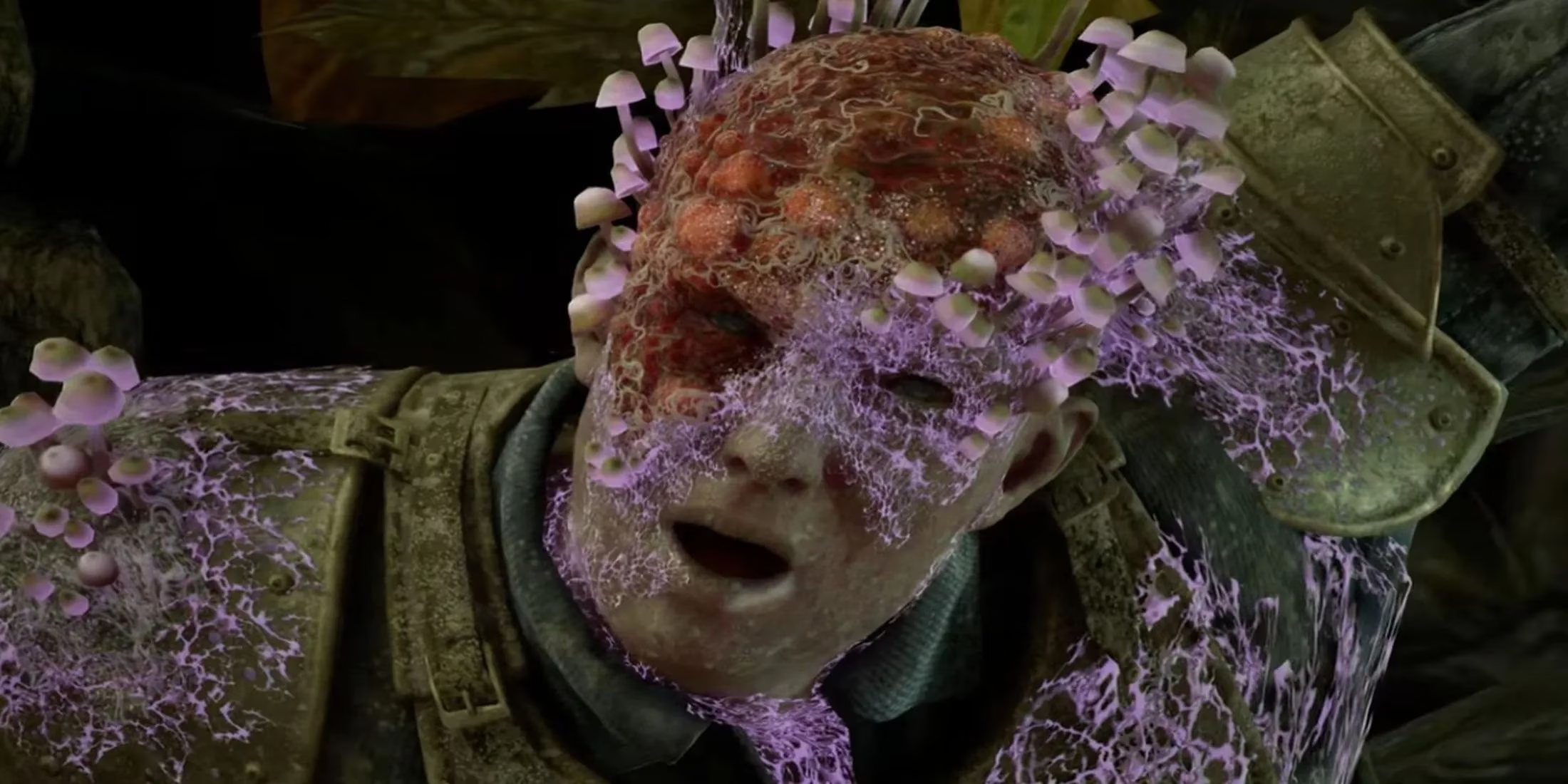
Avowed's connection to Eora gives it a deep well of lore, yet Obsidian has been clear that prior experience with the Pillars of Eternity games is not required. The studio instead uses Eora as a jumping-off point for a fresh adventure in a previously unseen region. The player's character is sent to investigate the Dreamscourge, a plague that appears to corrupt both people and the landscape. In the gameplay footage and trailers released before launch, the afflicted are shown covered in fungal growths, their bodies warped into hostile, violent creatures. That visual language is difficult to separate from The Last of Us, where Cordyceps turns people into hideous zombie-like monsters and became some of gaming's most iconic enemies.
The comparison is not merely cosmetic. The Last of Us took the well-worn zombie archetype and reinvented it through disturbing body horror, distinctive enemy designs, and lore that explained exactly how the infection changed its victims. Avowed's Dreamscourge appears to follow a similar path. It affects humans, animals, and nature, suggesting a contagion that is both biological and supernatural. The afflicted in Avowed look uncontrollably violent, their fungal deformities echoing the Cordyceps in both silhouette and implication. Depending on how deeply Obsidian explores this element, Avowed could become Xbox's own version of The Last of Us, at least in terms of fungal horror and enemy design.
Still, there are major differences between the two games. The Last of Us is a mostly linear experience with pre-existing characters who have established personalities, histories, and motivations before the plot begins. Avowed, by contrast, embraces a semi-open world and RPG traditions. Obsidian has long been known for extensive branching choices, morally murky dilemmas, and surprising narrative twists. That design philosophy means Avowed's Dreamscourge is not just a backdrop for set-piece encounters; it is woven into quests, faction conflicts, and player decisions. The following table summarizes the key overlaps and divergences.
| Element | Avowed | The Last of Us |
|---|---|---|
| Infection | Dreamscourge | Cordyceps |
| Visual horror | Fungal growths on humans and nature | Mushroom-covered infected |
| Enemy behavior | Violent, corrupted creatures | Zombie-like, increasingly mutated |
| World structure | Semi-open world RPG | Mostly linear action-adventure |
| Player choice | Branching quests and moral dilemmas | Fixed narrative with established characters |
| Platform identity | Xbox and PC | PlayStation and later remasters |
Key takeaways:
-
🍄 The Dreamscourge creates fungal horror reminiscent of Cordyceps.
-
🎮 Avowed is a semi-open world RPG with branching choices.
-
🧟 The Last of Us remains a linear, character-driven experience.
-
🌍 The Living Lands are transformed by the plague, adding environmental horror.
Since its 2025 release, Avowed has continued to be analyzed through this lens. The Dreamscourge remains one of its most memorable and unsettling elements, and the fungal enemy designs have proven to be a talking point among RPG fans and horror enthusiasts alike. Some observers argue that the comparison to The Last of Us is inevitable because both games tap into a primal fear of contamination and loss of self. Others point out that Avowed's fantasy setting, magic system, and choice-driven structure give the plague a very different purpose. In The Last of Us, the infection is a catalyst for survival horror and human drama. In Avowed, it is a mystery to be investigated, a threat to be fought, and a moral puzzle tied to the Living Lands.
What makes Avowed stand out in 2026 is how it combines these influences without simply copying them. The game's first-person perspective puts players face to face with the Dreamscourge's victims, making each fungal-covered encounter more intimate and immediate. The Living Lands themselves are a character in the story, with the plague visibly altering flora and fauna. This ecological dimension goes beyond The Last of Us's urban decay, pushing Avowed toward a darker fantasy form of environmental horror. The result is a game that can be compared to Naughty Dog's masterpiece while still feeling like an Obsidian RPG.
Ultimately, Avowed's Dreamscourge gives Xbox a distinctive answer to The Last of Us's Cordyceps. It is not a direct imitation, nor is it trying to be. Instead, Obsidian uses fungal horror as a foundation for exploration, combat, and choice. For players who enjoyed the terrifying infected of The Last of Us but prefer a fantasy world full of magic, factions, and branching quests, Avowed offers a compelling alternative. As the game continues to be played and discussed in 2026, the Dreamscourge will likely remain at the center of that conversation, proving that mushroom-covered monsters can be just as effective in a dark fantasy RPG as they are in a post-apocalyptic survival story.
Comments