 AvowedRealm
In the vibrant and ever-evolving world of role-playing games, Obsidian Entertainment's long-awaited fantasy RPG, Avowed, has finally arrived, marking the studio's first major AAA release in over five years. The game has ignited a passionate and divided conversation within the gaming community. While many critics and players have praised its focused design and engaging world, a significant contingent of fans, particularly those with deep affection for Obsidian's legacy titles like Fallout: New Vegas and Pillars of Eternity, have voiced strong criticism. This division stems from a fundamental clash between Avowed's deliberately old-school, condensed approach and contemporary expectations for expansive, boundary-pushing RPG experiences in an era defined by titles like Baldur's Gate 3.
The Heart of the Controversy: A Deliberately Old-Fashioned Blueprint
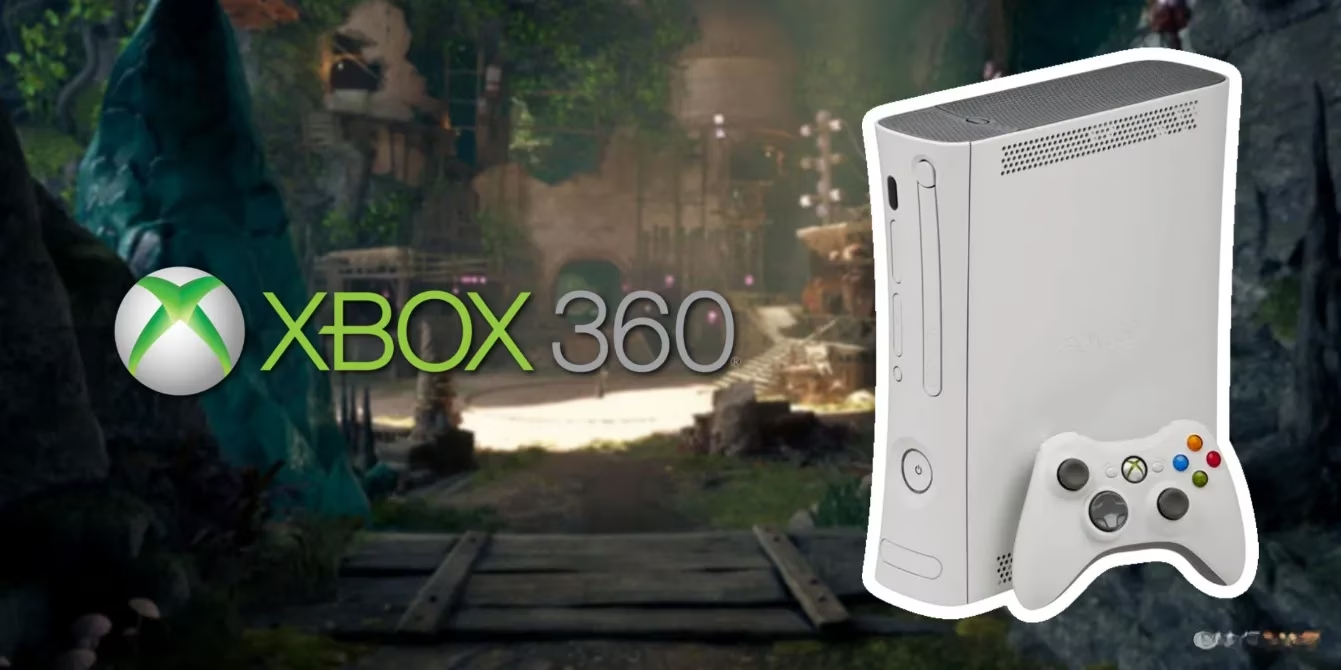
A significant portion of the critique directed at Avowed centers on its traditional, almost nostalgic, game design philosophy. In a landscape where recent genre-defining releases are celebrated for their innovation and systemic depth, Obsidian has opted for a more conservative path. The studio has not attempted to reinvent the wheel or deliver a genre-shattering masterpiece. Instead, Avowed often feels like a deliberate homage to a bygone era of game development—specifically, the mid-budget RPGs of the Xbox 360 generation. This approach yields both distinct advantages and notable shortcomings that have become focal points of player discussion.
A Welcome Reprieve from Open-World Bloat
One of Avowed's most universally praised aspects is its rejection of the modern open-world template characterized by vast, often empty landscapes filled with repetitive tasks. The game offers a refreshingly concise adventure. It is not the sprawling "Skyrim successor" some had anticipated but rather a more tightly constructed experience reminiscent of Obsidian's previous title, The Outer Worlds.
The world of Avowed is not a single, seamless expanse. Instead, it is structured around four distinct, hub-based regions:
-
Dawnshore
-
Emerald Stair
-
Scatterscarp
-
Galawain's Tusks
While these areas may not boast the sheer square mileage of some contemporaries, they are densely packed with meaningful side content, intriguing locations to discover, and hand-crafted detail. This design choice prioritizes quality and purposeful exploration over sheer scale.
A Manageable Runtime in an Age of Epic Grinds
This condensed structure directly translates to a significantly shorter playtime compared to most modern blockbuster RPGs. According to aggregated data from How Long to Beat, completing Avowed's core narrative takes approximately 16 to 18 hours. A more thorough playthrough that includes a substantial amount of side content extends the experience to roughly 30 hours.
To put this in perspective, here's how Avowed's runtime compares to other major recent RPG releases:
| Game Title | Main Story Length | Completionist Length |
|---|---|---|
| Avowed | ~17 hours | ~30 hours |
| Cyberpunk 2077 | ~25 hours | ~100+ hours |
| Assassin's Creed Valhalla | ~60 hours | ~140+ hours |
| Baldur's Gate 3 | ~55 hours | ~150+ hours |
For players weary of committing hundreds of hours to a single game, Avowed's length is a feature, not a bug. It harks back to a time when a rich, satisfying RPG adventure could be experienced over a weekend or two without demanding a lifestyle-altering time investment 😌.
Where the "Dated" Feel Becomes Apparent
However, Avowed's retro-inspired design extends beyond just structure and into elements that some players find jarringly archaic. Despite being a visually striking game with impressive art direction, certain technical and immersive aspects feel undercooked for a premium, $70 release in 2026.
-
Static Environments: Notably, the foliage and vegetation in the game's lush environments are completely static. Trees and grasses do not react to wind, player movement, or spells, breaking immersion in a world that otherwise looks beautiful.
-
Lifeless NPCs: Non-playable characters within settlements often stand rigidly in place, lacking the dynamic schedules or ambient behaviors seen in other modern RPGs. The world can feel like a detailed diorama rather than a living, breathing place.
-
Convenient Clean-Up: Defeated enemies and their lootable bodies frequently vanish shortly after combat, a convention that feels like a holdover from older hardware limitations rather than a conscious design choice.
These elements contribute to a world that, while gorgeous to look at, feels more static and less interactive than the dynamic standards set by its peers. For critics, this disconnect is hard to justify at a full AAA price point.
Identity and Legacy: Not a Revolution, But a Specific Evolution
Ultimately, Avowed positions itself not as the next Baldur's Gate 3 or Cyberpunk 2077, but as a spiritual successor to a different lineage of games. Its closest kin are titles like Kingdoms of Amalur: Reckoning—ambitious, character-driven RPGs from the late 2000s and early 2010s that offered focused adventures with clear beginnings and ends. Avowed embraces this identity wholeheartedly. It is a game with rough edges and concessions that mark it as a product of a specific, less resource-intensive design philosophy.
Yet, within those confines, it possesses a distinct charm. The writing, quest design, and player choice—hallmarks of Obsidian's pedigree—shine through. The combat is responsive and allows for creative hybrid builds, and the central narrative provides a compelling reason to explore its beautiful, segmented world. It may lack the sheer systemic ambition of its most celebrated contemporaries, but it executes its more traditional vision with confidence.
Conclusion: A Niche Delight in a Broad Market
Avowed's release and the subsequent debate underscore a growing tension in the RPG genre between boundless innovation and refined tradition. It is a game that makes no apologies for what it is: a polished, mid-scale RPG experience that prioritizes a manageable narrative and handcrafted exploration over endless content and living-world simulation. While its $70 price tag and some undeniably dated technical aspects are valid points of contention, it successfully carves out a niche for players yearning for a complete, satisfying adventure that doesn't overstay its welcome. Avowed may not be the genre-defining event some hoped for, but as a deliberate and well-crafted throwback, it stands as a compelling, if divisive, chapter in Obsidian's esteemed legacy 🗡️📖.
Comments